
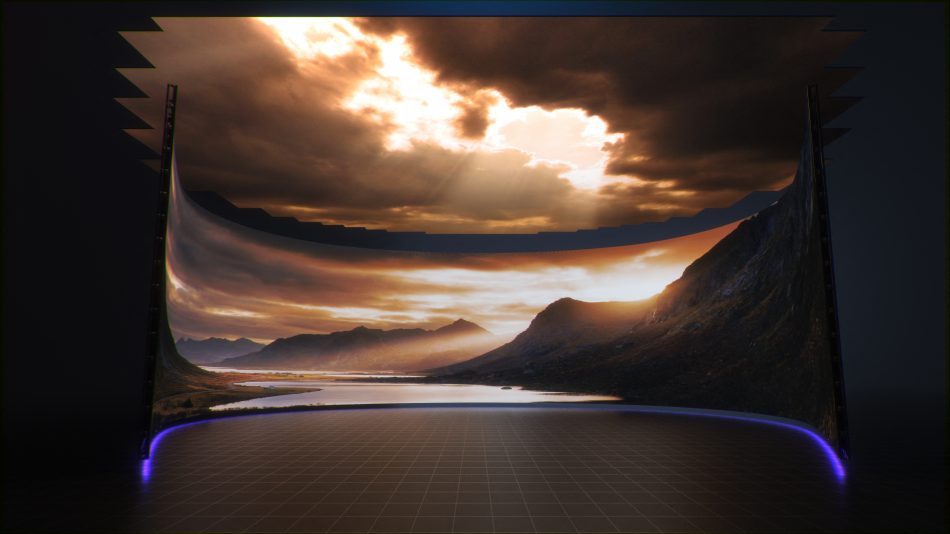
I’ve said in various presentations over the years “every light becomes a pixel, and every pixel becomes a light”. And I recently gave a presentation titled “Every Surface a Screen: Now What?” where I asked what happens when every architectural surface becomes a digital display.
This is a future that is already the present for the film and TV production industry. The explosive popularity of virtual production studios is rapidly changing the very nature of what constitutes “photography”, “lighting” and “visual effects” – forcing those traditionally siloed individual crafts to fuse their workflows together. Unreal Engine is becoming the singular pipeline for designing, planning, constructing the environments and controlling both the visual display surfaces and the projected lighting.
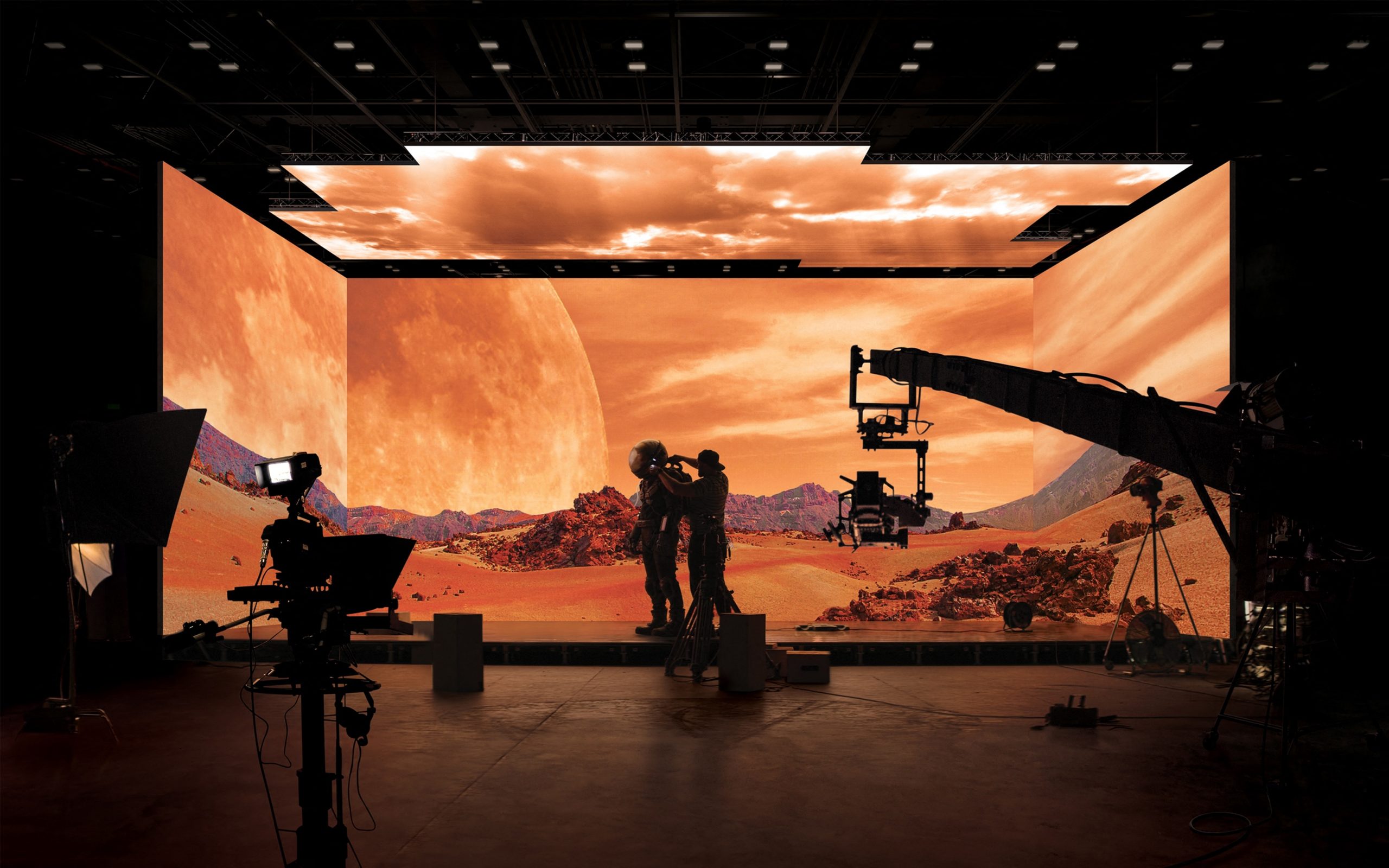
The traditional architectural placemaking community needs to wake up and prepare for a very different future – embracing all new creative concepts, conceptual frameworks, working pipelines and physical technologies. For example, I previously posted how Moment Factory is mixing Unreal Engine with DMX previz.
Check out this interesting “roundtable” article in which three practitioners from the media production industry talk about lighting and the impact of LED display walls on how they work. I find it fascinating to see that RGBWW LED display panels are being developed for better color reproduction. Even more fascinating: RGBWW pixelated floodlights are being launched to match the environmental lighting very precisely – products like the Kino Flo Mimik panel light.
Many of the tired old arguments that digital signage “can’t be used” as architectural lighting are fading quickly: Energy efficiency? LED panels are LED (duhh!) and I see no reason they can’t be as efficacious as other light sources. Color rendition? With 5 channels and native white phosphor sources, they can now trump most architectural fixtures. Circadian rhythm? Again, 5 channels gives tremendous opportunity for custom tuned spectra. Repairability? LED displays are modular. How’s Zhaga doing in the lighting industry??? And so on.
Worse, signage controls are light-years ahead of lighting controls. A $150, cloud connected 4K HDMI player is effectively driving ~21 million channels of light at frame rates of 120hz. Try asking Crestron or Lutron to quote a system for 21 million channels of lighting control. Good luck!
When will architectural lighting move beyond ancient technologies like 0-10v control or DALI? Will it ever, or will “architectural lighting” simply be rendered obsolete as the built environment rapidly bypasses the architectural lighting industry to become a world filled with rich digital media content?
 Lucept