
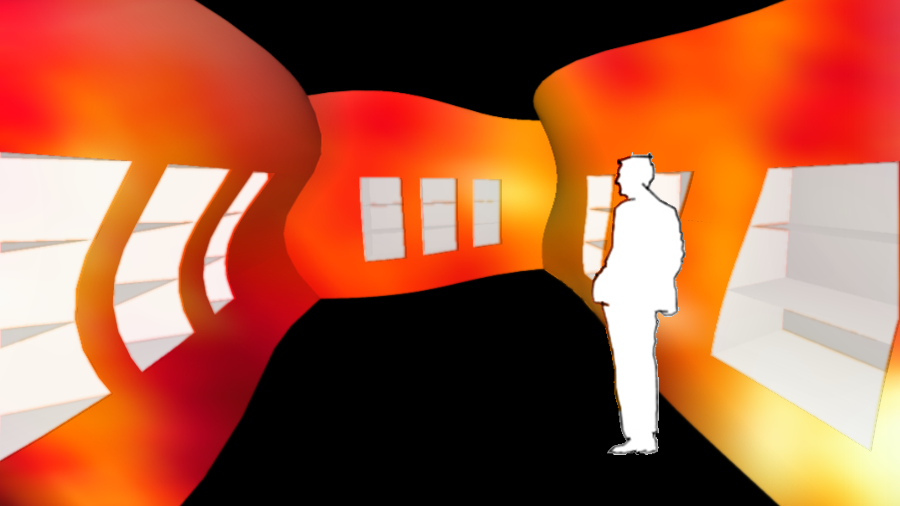
Frank Gehry, your impact on this world was immense. Thank you for all the inspiration you gave to a entire generation of architects and your impact on liberating the built environment from bland boxes.
25 years ago, I was exploring the implications of early LED technologies and it was obvious that LEDs would lead to something akin to a “digital video textile” that could place digital video on any surface, in any physical format, at any level of transparency.
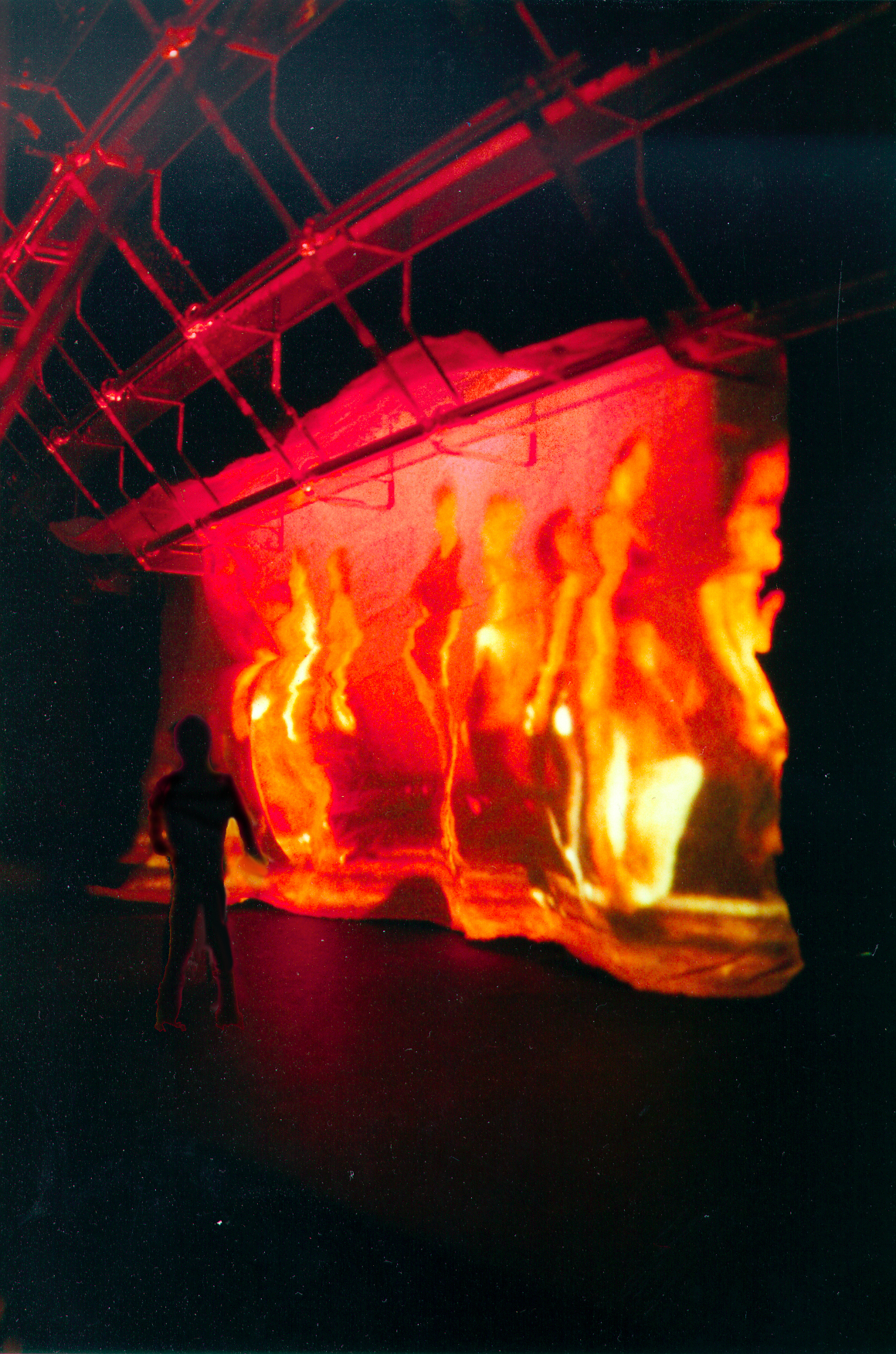
But as if that wasn’t relevatory enough, I started to explore the implications: What happens at the intersection of the physical and virtual worlds? What does it look and feel like when our physical places become portals to the digital world?
James Turrell, with his “ganzfeld” art pieces, provided direct inspiration for the concept of “layering realities” in physical space. Once you fundamentally understand that light — all light — is additive, and that this magical digital “textile” could be diaphanous, you can layer physical/digital/physical or digital/physical/digital or any combination, along with normal projected lighting and internal glowing objects. Hence the titled of my thesis: “Active Objects, Surfaces and Zones“.
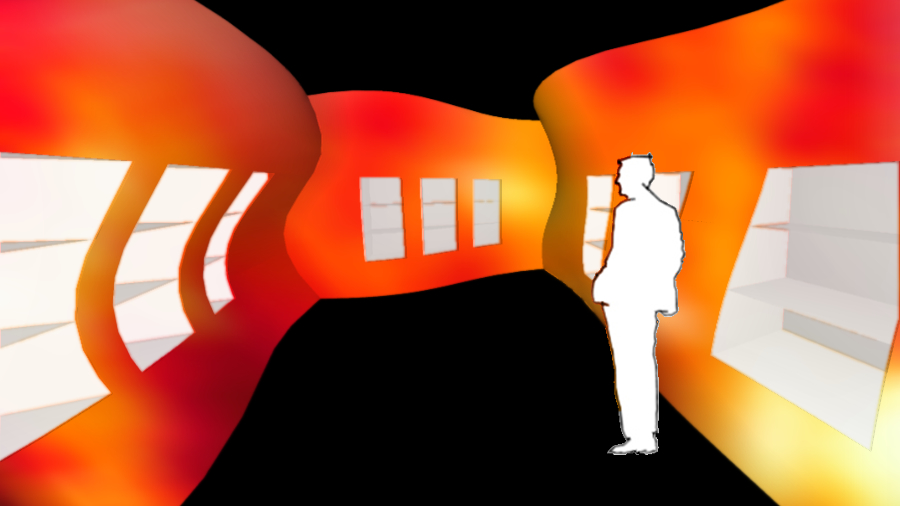
But it was Frank Gehry – whom in 1999 loomed so large with the fabulous Guggenheim Bilbao having recently just opened, and who’s use of CATIA to build compound curving surfaces was such a radical technology at the time – who provided me a way of breaking out of the orthogonal box, to visualize the creative possibilities of layering digital/physical/digital.
I asked myself: “What if Gehry had this magical digital textile? What would he build with it?”
And let me tell you – it was NOT EASY in 1999 to visualize and model 3D curving, luminous surfaces with internal glowing shelves (let just say – Photoshop – also a fairly new technology at the time – was a godsend). Anyone who’s tried to work with luminous surfaces realizes that without shadow, the perception of curving surfaces is completely lost.
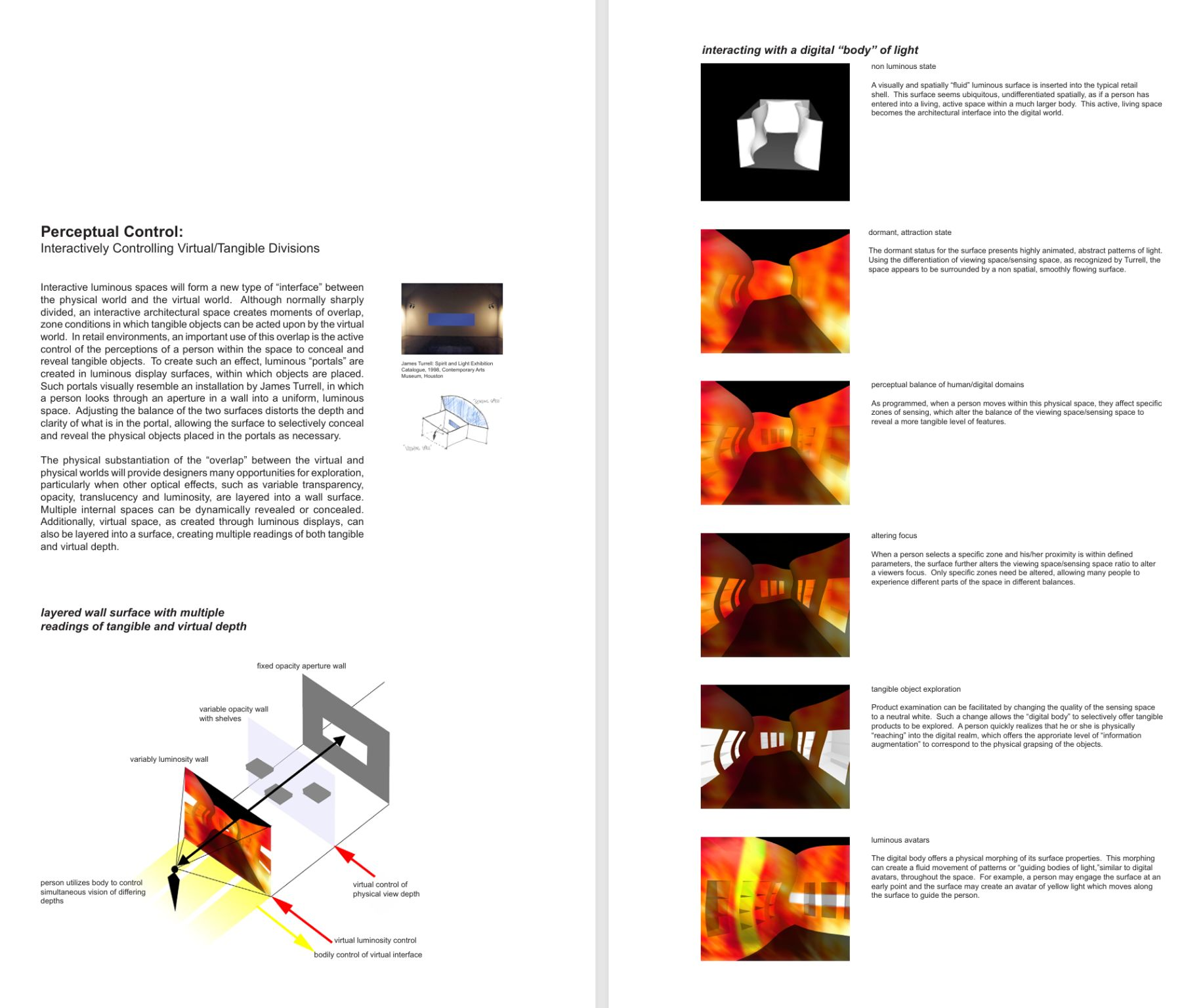
I’m proud that this page from my final thesis still looks futuristic over a quarter century later. The only difference in that instead of people thinking I’m crazy, everyone realizes this can be readily built today, thanks to visionaries like Frank Gehry and his studio.
 Lucept