
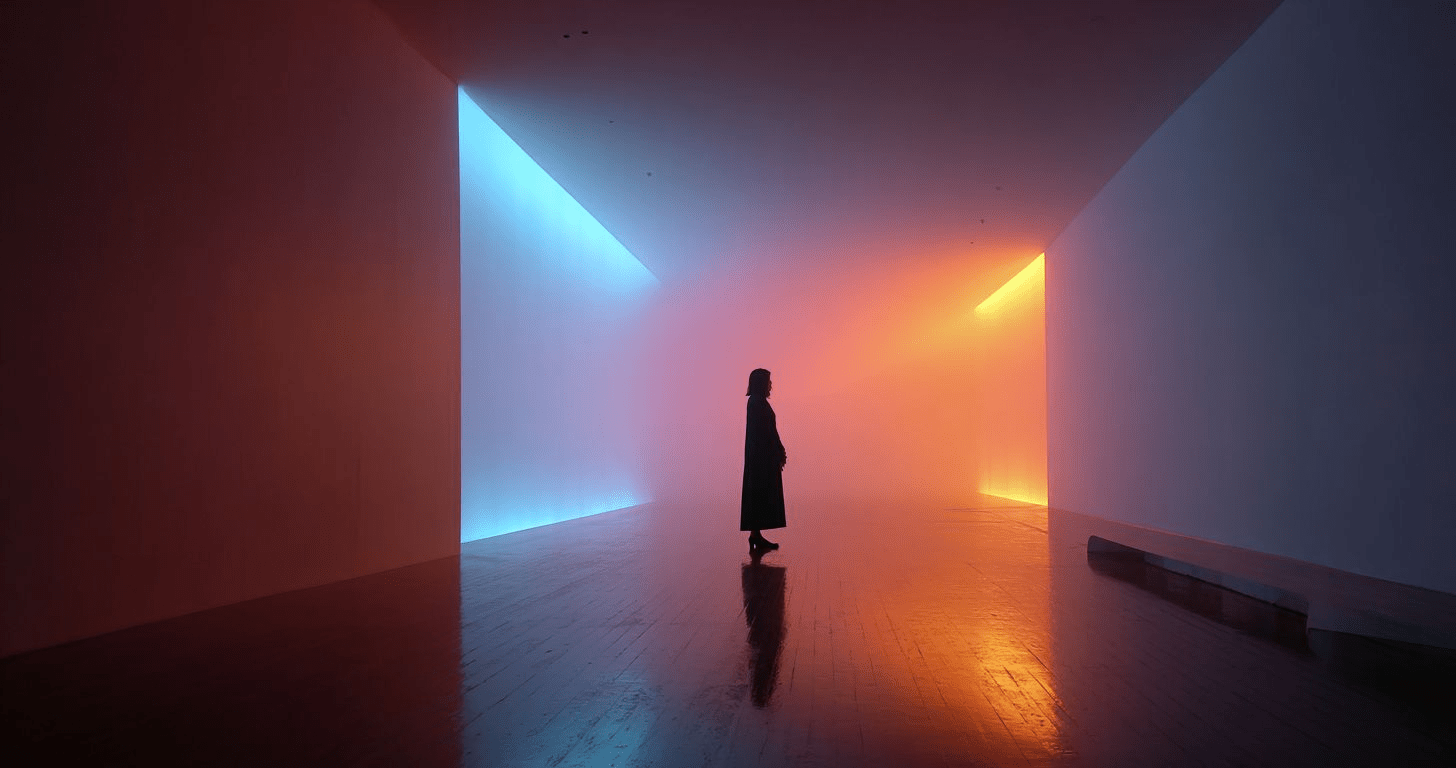
What will intelligence look like in our built environment?
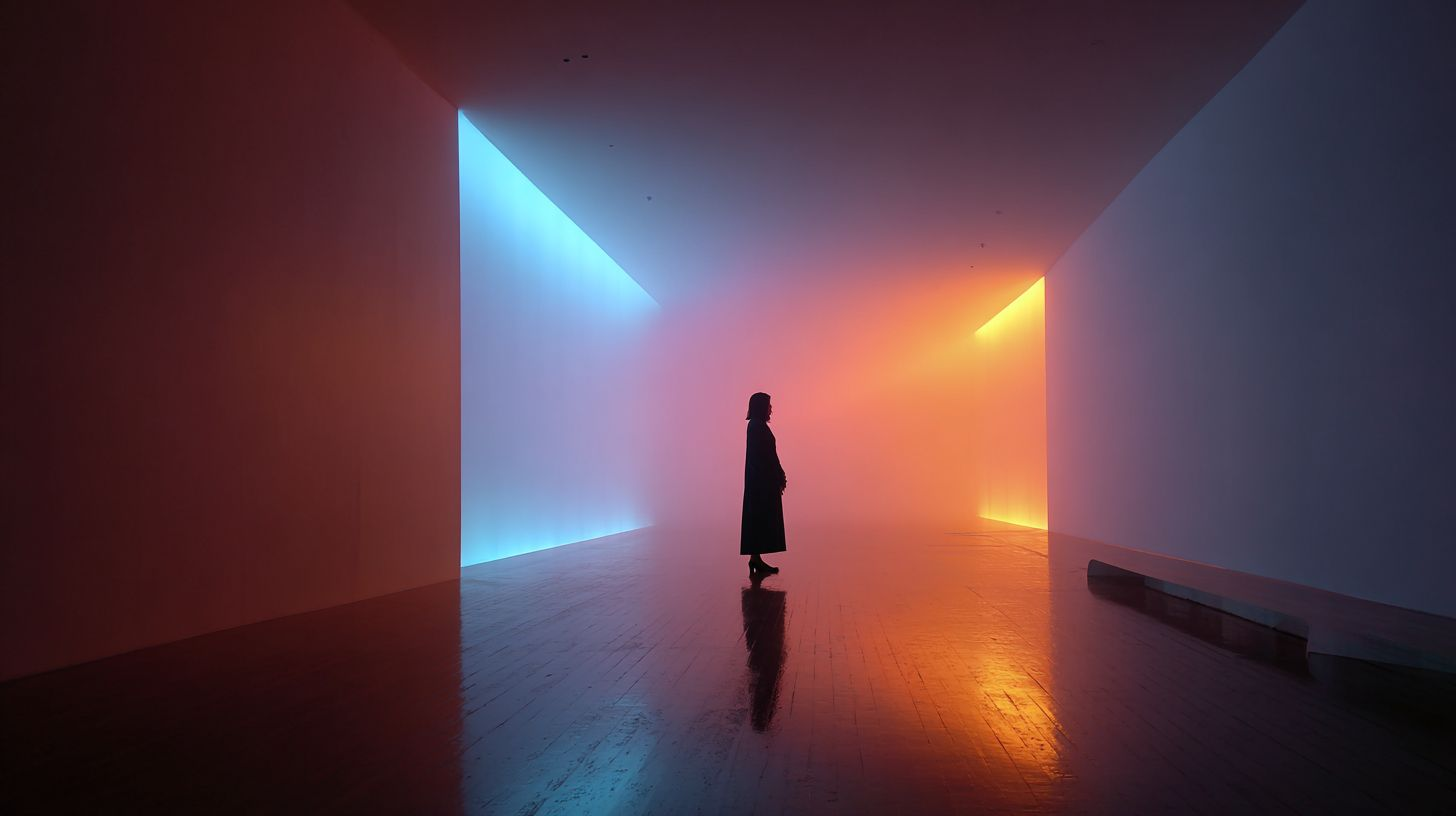
Imagine if a classic James Turrell installation were actually intelligent, if its “brain” were an AI perceiving its surroundings, interpreting countless data streams, and dynamically shaping the occupant’s experience.
What would that feel like?
What would designers and artists do with this capability?
Would there be a subtlety to these “conscious luminous effects”? Would they be passive and ambient? Or would they be direct and authoritative?
Would they be stern and serious or joyful and ebullient?
Would they express a “brand” identity and if so, whose? The star architect’s? The commercial tenant’s? The influencer occupant’s?
Every electric light source in our environment, from the simplest fixture to the most sophisticated LED display wall, can become a portal to the virtual world. Each can be data-driven, augmented by AI, and responsive to human presence and context.
Our spaces could soon be alive with intelligent, ambient media; experiences that powerfully shape behavior, emotion, and atmosphere in real time. Just as powerfully as James Turrell’s art pieces.
The profound question is:
Who will design these systems?
 Lucept