
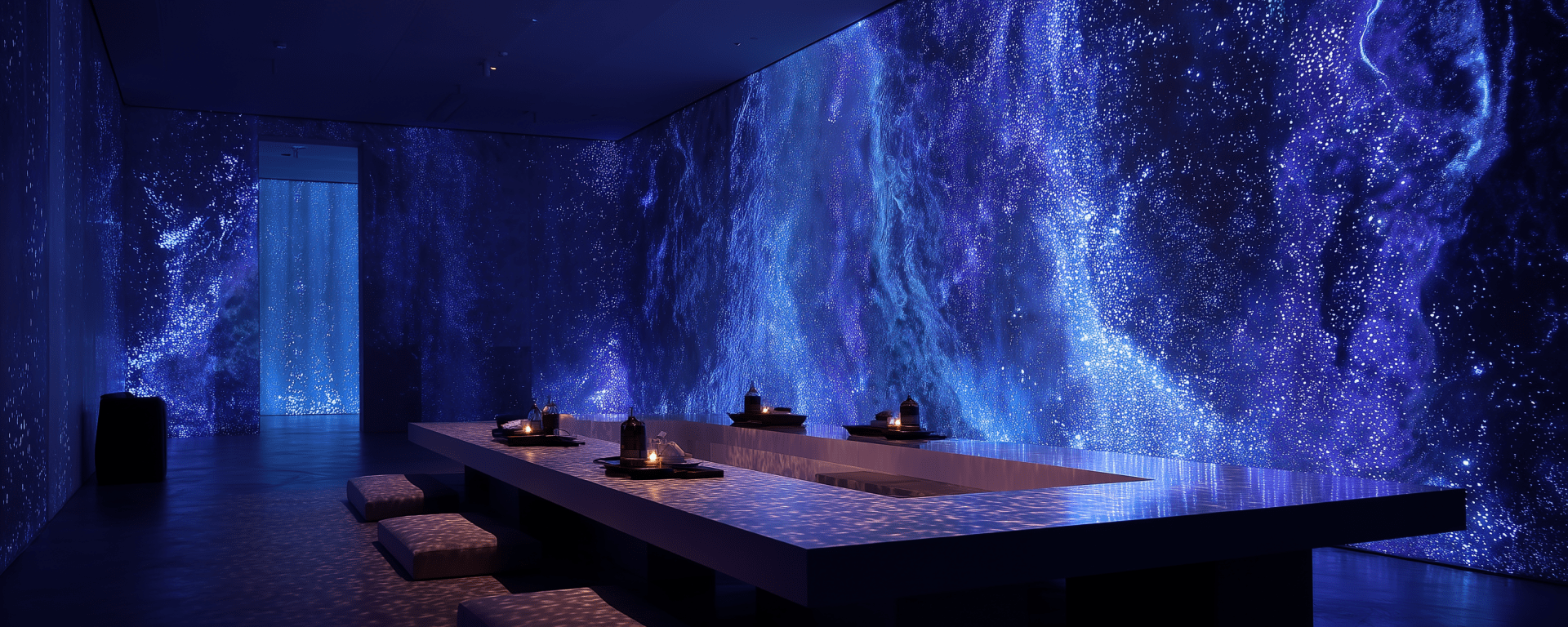
Seduction is the first step to immersion
Before anyone can have a memorable experience in a space, before they can be captivated, transformed, or emotionally moved, they must first want to engage. They must be drawn in. And that requires seduction.
There is enormous potential in treating architecture as a portal to the digital world. We can design retail, hospitality, and healthcare environments that surround occupants with dynamic, evolving layers of content. But too often, digital installations go unnoticed.
How many times have you walked through an airport, hotel lobby, or retail store and seen a massive digital screen that no one even notices? The problem is not with the technology or the idea of digital content. The problem is that it has not been meaningfully integrated.
These screens are often added at the last minute. They are physically disconnected from the flow and rhythm of the space, aesthetically disconnected from the materials and structure around them, and conceptually disconnected from the environment’s purpose. In many cases, the content is generic advertising designed for social media, not for spatial storytelling.
Designers already have the tools to do better. With even a basic understanding of progression, thresholds, and pacing, digital surfaces can become part of a space’s flow. But that is just the foundation.
I want to look beyond the basics. Let’s explore ways to combine architectural thinking with seductive storytelling, drawing from theatre, cinema, literature, architecture and immersive entertainment. When digital experiences are carefully woven into the environment, they do more than inform or decorate. They invite, entice, and ultimately immerse.
1. Seduction Through Tease
The idea: Most digital environments aim to be complete, polished, and blast everything at full volume. But seduction often lies in the unresolved, the hinted, the half-revealed.
How it applies: Consider designing installations that deliberately withhold information or resolution. For instance, a digital layer in a hotel bar that only periodically reveals fragments of a larger story, that guests might start to piece together over multiple visits. Or a retail backdrop composed like a digital bricolage that reveals illusory images or pieces of a larger puzzle, but lets guests fill in the blanks.
Why it works: Curiosity is a stronger driver than clarity. Suggestion invites participation and emotional investment.
2. Temporal Immersion That Invites Return
The idea: The most powerful seductions unfold over time.
How it applies: Create experiences that develop across multiple visits. A high-end fashion boutique might use a digital profile to evolve product recommendations narratively. A hotel might tell a multi-part story through ambient media in different rooms tracking a room key. Think less about “activation” and more about long-term narrative arcs that are rooted in and only available in specific physical places.
Why it works: This shifts immersion from a one-off spectacle to an unfolding relationship with a place. Guests come back to see what happens next.
3. Emotional Texture Over Sensory Overload
The idea: Immersive doesn’t have to mean visually intense. It can also mean emotionally rich.
How it applies: Create emotionally resonant atmospheres rather than acute visual bombardment. Combine lighting, sound, scent, and digital visuals to evoke states like nostalgia, longing, or calm. For example, a retail space that uses ambient music and hazy sky gradients to recreate the memory of a summer evening. As vision systems progress, even anonymous systems will be able to estimate guest moods and live-generated content can literally resonate with guest’s emotional wavelengths.
Why it works: People forget what they saw but remember how they felt. Emotional resonance creates deep lasting impressions with a place.
4. Mirror Worlds and Personalized Myth-Making
The idea: Immersion becomes seduction when the environment reflects the guest’s own identity back at them in elevated form. Just look at the surging popularity of AI apps like Sora by Open AI.
How it applies: Use responsive tech to create experiences that don’t just personalize, but mythologize. A boutique fitting room could transform into a theatrical runway. A hotel room might adapt mood lighting or scent based on a guest’s origin story or emotional preferences. Make your guests feel like – even for a fleeting moment – their heros.
Why it works: Seduction flatters. Guests are drawn to experiences that make them feel central, seen, and subtly heroic.
5. Micro-Theatre and Ambient Storytelling
The idea: Not all immersive experiences need to shout. Some should whisper. And in those whispers, some should tell you stories.
How it applies: Think of immersive installations as ambient theatre. The architectural space can take on personas, like avatars in the light. Multiple avatars in a space might interact with a guest, like a theater-in-the-round experience. The space will “play” with you to convey either abstract or literal meanings that can quickly build tremendous depth of undertanding.
Why it works: Subtle immersion invites participation without demanding it. It creates the feeling that the environment is quietly alive and you are part of that living environment.
6. Ritual as Interface
The idea: Rituals are more powerful than routines. They turn the mundane into the meaningful.
How it applies: Rethink digital interactions as ceremonial. Check-in could involve symbolic gestures that trigger lighting or sound. Trying on clothes could involve a choreographed process with theatrical lighting, music shifts, or scent release.
Why it works: Rituals create memory, shape emotion, and foster belonging. When digital systems support ritual, they become intimate, not just functional.
7. Subversive Play and Immersion as Rebellion
The idea: Not all seduction is about delight. Sometimes it’s about disruption.
How it applies: Design digital environments that challenge or tease the user. A retail display might react differently depending on the mood of the visitor. A room might “refuse” to respond to standard inputs until the guest tries something unconventional. More sassy brands will want their architectural spaces to act…well, sassy.
Why it works: Subversive experiences create friction in a good way. They spark curiosity, create stories worth sharing, and make immersion feel unpredictable and alive.
 Lucept