
Do Cute Droids Represent the Future of Architectural Systems?
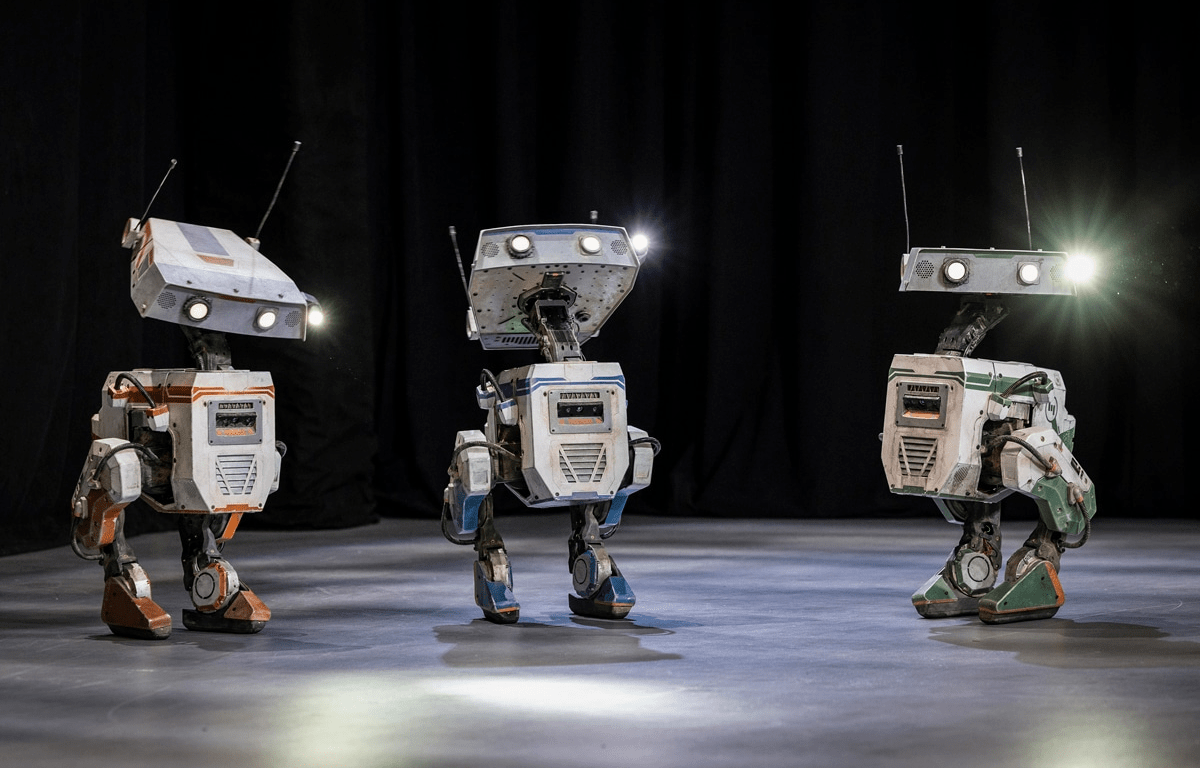
Moritz Baecher, Associate Lab Director at Disney Research, recently delivered a fantastic deep dive at NVIDIA’s GTC25 conference into the development of Disney’s immensely popular BD-X droids. His presentation offered an outstanding overview of the design, engineering, and AI training concepts that make these popular little robots feel so magical and lifelike.
The techniques being explored by Disney Research and Walt Disney Imagineering for AI training to blend functional machine learning with quirky personality profiles offer a glimpse into the future of controlling architectural environments and creating immersive digital experiences.
A New Conception of Architectural Systems
Architectural spaces must meet certain minimum functional requirements for human occupancy, such as temperature, ventilation, lighting, etc.
Beyond that, most spaces serve a higher purpose requiring additional functional optimizations. Retail shops, hotels, offices, and healthcare facilities, for example, incorporate specialized systems such as A/V for digital signage, show control for entertainment performances, or technical systems for sterilization.
But that’s where the concept of most “architectural systems” ends. Architecture, in its current state, is a “dumb” machine – an unthinking system with little to no intelligence, interactivity, or ability to optimize itself – outside of your basic thermostat. And certainly, most modern buildings lack any sense of living personality. So far, the decade of IoT enabled “smart buildings” has barely managed to digitize these ancient, basic performance controls, much more approach anything actually “smart”.
Functional Optimization + Spatial Personality
What Disney is doing with its BD-X droids is, essentially, creating AI-enhanced puppets. And puppetry has an incredible ability to instill life into lifeless objects. Who doesn’t love Kermit the Frog or Cookie Monster? These are, at their core, just sock puppets! If socks, fluff, and foam can be transformed into beloved cultural icons, then so can the physical systems of buildings, especially with the help of modern digital displays, lighting, and mechanical actuation systems.
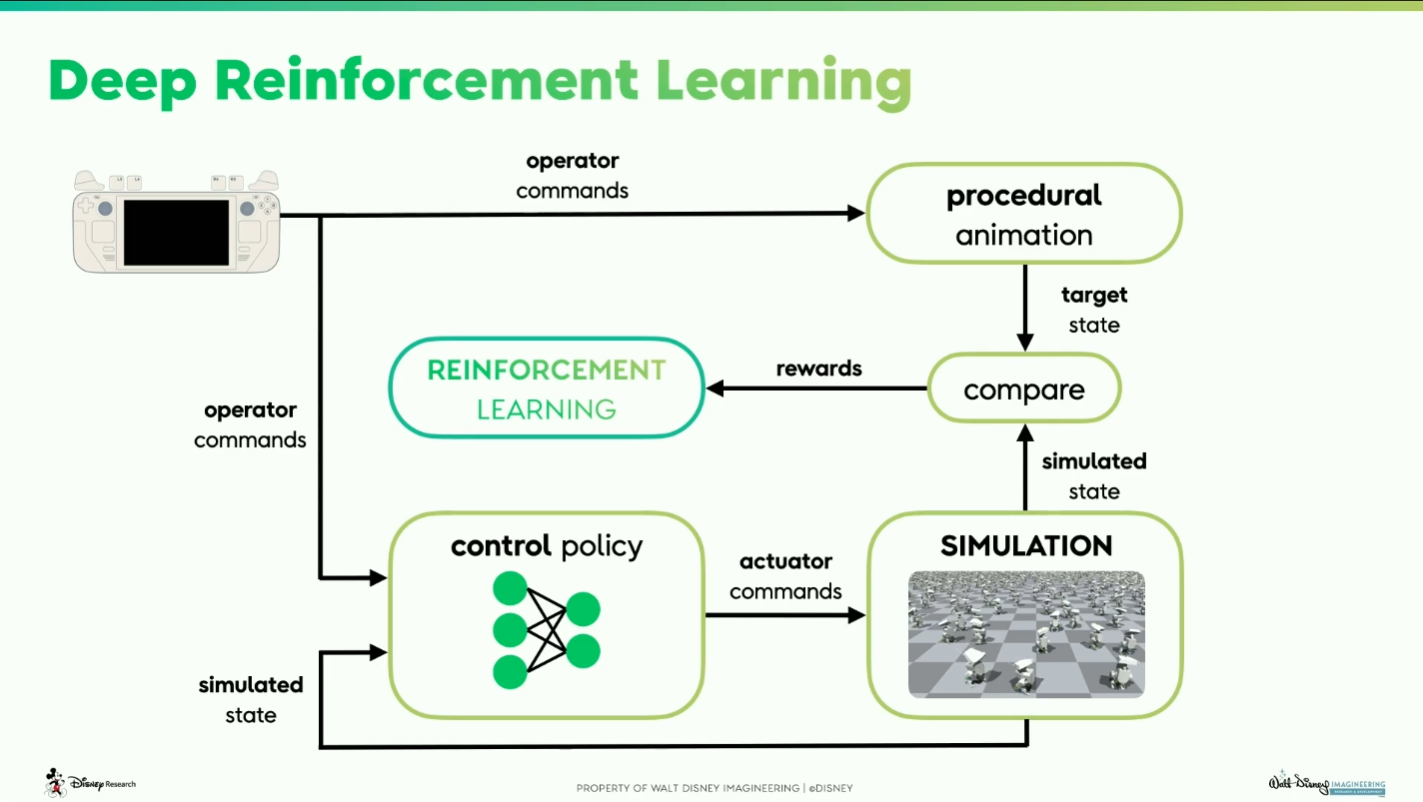
Disney’s researchers use AI simulations to train their droids in foundational activities, such as maintaining balance while walking over uneven terrain. But they don’t start with simple functional requirements. Instead, they begin with a human animator crafting an artistic concept, such as how a droid from the Star Wars universe should move. The AI is then trained in simulations to align its functional performance with that stylistic vision, ensuring the droid walks in a way that is both expressive and practical.
So the BD-X droids have semi-autonomous basic functions with periodic manual inputs, both of which are combined into the incredibly lifelike performances the droids give.
This same philosophy is what immersive digital environments in architectural spaces require: a seamless blend of creative intent and functional success. Our built environments need both functional optimization and spatial personality.
Buildings need their basic functions to be largely self regulating, perhaps with minor adjustment inputs from the occupants as needed: “Dear building, could you please make it a little warmer…I feel cold.”
But the higher level interactions are an area ripe for spatial designers to add richness, interactivity and meaning…to create immersive digital experiences in the built environment: “Dear building, I feel depressed. Could you cheer me up?”
How Would That Combination Work? Consider a Few Examples:
- What if a modern building designed for sustainability and human well-being had its own personality? Would it be kind? Sympathetic? Nagging? Encouraging? Playful? How would it nudge human behavior toward sustainability? Could it help someone having a bad day? Would it have a built-in philosophical AI guiding its interactions?
- Imagine if iconic architects like Mies van der Rohe, Le Corbusier, or Frank Lloyd Wright had access to these technologies. How would they blend their artistic intent with machine-learning systems? What personality would they infuse into their spaces? These were strong-willed designers: Would their embedded philosophies improve or constrain how occupants experience their buildings?
- How would contemporary architects shape these AI-driven environments? How would a Bjarke Ingels residence interact with its occupants? Or a Frank Gehry museum? Or a Peter Marino retail store?
- What about hospitality and retail brands? Could their spaces become key brand ambassadors, engaging with customers in ways more intimate than traditional advertising?
Architects and designers already shape the lives of a building’s occupants. But the question remains: How much control should they have? And how precise should that control be?
Learning Against an Ideal
AI-driven systems can evolve without direct human input. Perhaps the most profound insight from Disney Research is that a human designer can dictate an ideal, or aspects of an ideal, and the machine will optimize its learning cycles against that standard.
This means that the human intent behind a design remains embedded in the “bones” of a building’s digital systems. Like a cornerstone laid deep in its foundation, the digital training ideal may persist indefinitely. But unlike masonry, digital systems can continuously optimize against that ideal—adapting dynamically to live occupant inputs, behavioral trends, and environmental changes.
In fact, buildings could one day respond to an endless array of factors—from local climate conditions and regional energy consumption to global political events or even a flash sale for a trending product or the collective mood of the occupants.
This vision of AI-driven architecture is both exciting and complex. As we move toward this future, we must ask: What role should intelligence and personality play in our built environments? And how do we ensure these systems enhance, rather than dictate, human experience?
 Lucept