
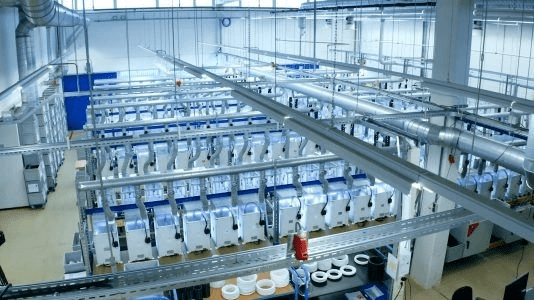
EDITOR’S NOTE: I uploaded the image above on LinkedIn in early December, 2024 and surprisingly, it went viral, achieving 16,000+ impressions and reaching 10,000+ people in about two weeks. It remains shocking to me that such a basic photo of 3D printers in a factory could stimulate so much interest. I had a couple dozen people in the additive manufacturing industries connect with me on LinkedIn. It is staggering to me how slowly innovation really happens. I watched this development happen over the course of 12 years! Capability that the company had ready to go over a decade ago took this long to see widely implemented. It is a tough lesson for anyone trying to drive innovation in a major corporation.
Bram Knappen was at Philips Research and started the whole thing. I worked with Bram since he was using crude hand built RepRap printers in his lab. Bram even worked with my Luminous Patterns venture for 1/2 year back around 2012 to further explore additive manufacturing. In a way, we were both exploring digital manufacturing; I went with subtractive CNC + digital 2D printing (which made sense for large scale architectural surfaces) and Bram went with 3D printing (which made sense for mechanical components in traditional fixtures). Later, I spent my final year at Philips Lighting/Signify leading product marketing for the 3D printing corporate venture team in Maarheeze, a nearly abandoned Philips Lamps production site that the 3D venture reclaimed as cheap R+D space.

HERE IS THE ORIGINAL TEXT OF THE VIRAL POST:
Interesting (and rare) public image of one of Signify’s 3D printing factories, churning out 3D-printed mechanical components en masse for LED lighting fixtures. So great to watch my former colleagues continue their progress, ever since it started over a decade ago in a small R&D lab in Eindhoven. One of the rare success stories of a radical design/engineering/operational transformation starting in an R&D lab, then moving into a corporate venture structure and then being widely deployed across a multinational, matrixed business.
ADDED TO THE COMMENTS:
People seem interested in this post. If you want to know more:
Check out the European site for the 3D printing group: https://www.pro.mycreation.lighting.philips.com/en-eur
Or check out my blog posts from 2019 covering the development:
https://lucept.com/2019/12/14/signify-3d-printing-videos/
https://lucept.com/2019/05/21/signifys-3d-printed-mycreation-series/
FOLLOWING IN THE COMMENTS:
Bart Maeyens, who now heads 3D printing at Signify, added this information in the comments:
Brad Koerner thanks for sharing this. For those interested in some numbers: since then over 2.500.000 complete luminaires made. We now run roughly 900 printers on global level in our 4 factories and 3 engineering hubs. You can find our solutions installed in retail – office and hospitality projects across >60 countries. The recycled content is 65% minimal and often 100%, we have reprinted several original luminaires to brand new and with that proof that we can close the loop. All products are configurable for professionals and consumers and we are absolutely not done. Faster printers, new sustainable materials, smarters architecture and more creativity for the customer. We are having fun and try to make a sustainable impact, one printed luminaire at a time. Cheers, the MyCreation team. Always welcome to visit us Brad.
 Lucept