
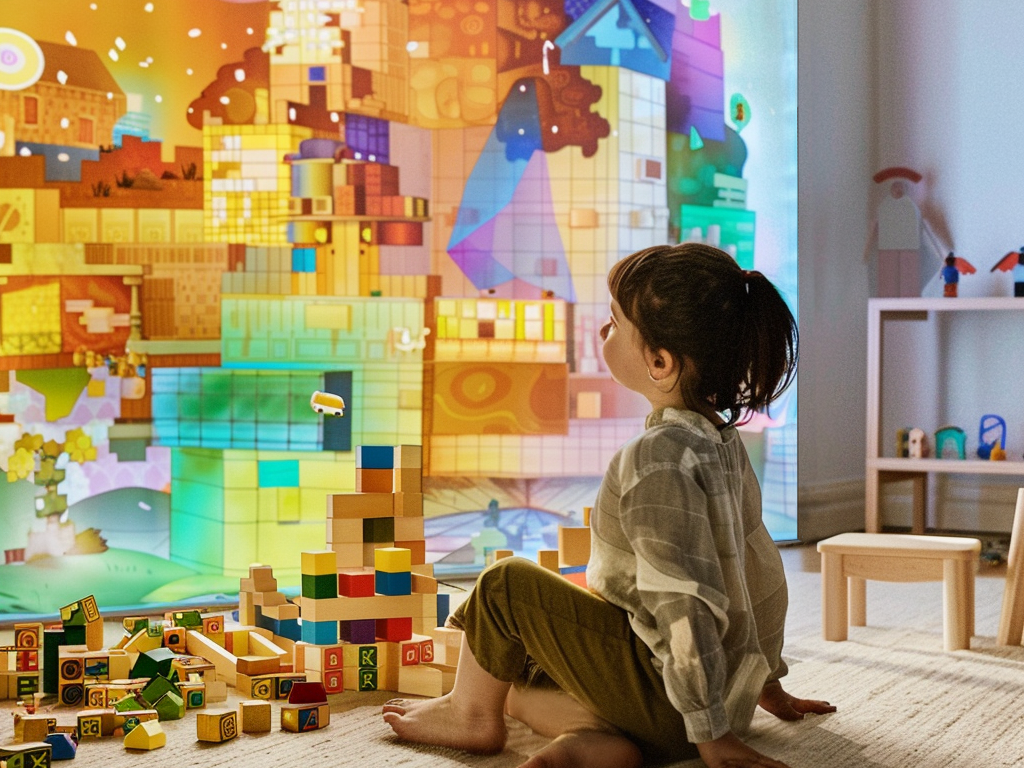
What happens if a child grows up next to a magical portal?
If an entire wall surface, perhaps in their very own bedroom, becomes a full-scale portal into the worlds of their imagination?
Will the architecture that surrounds them become their imaginary friend? Will their bedroom become their teacher, mentor, guide? Will their architectural space take them on magical journeys of exploration? Will their walls extend their play into worlds far beyond the limits of their room?
Will the architecture that surrounds them allow children to not just “make art” but to invent entirely new forms of art?
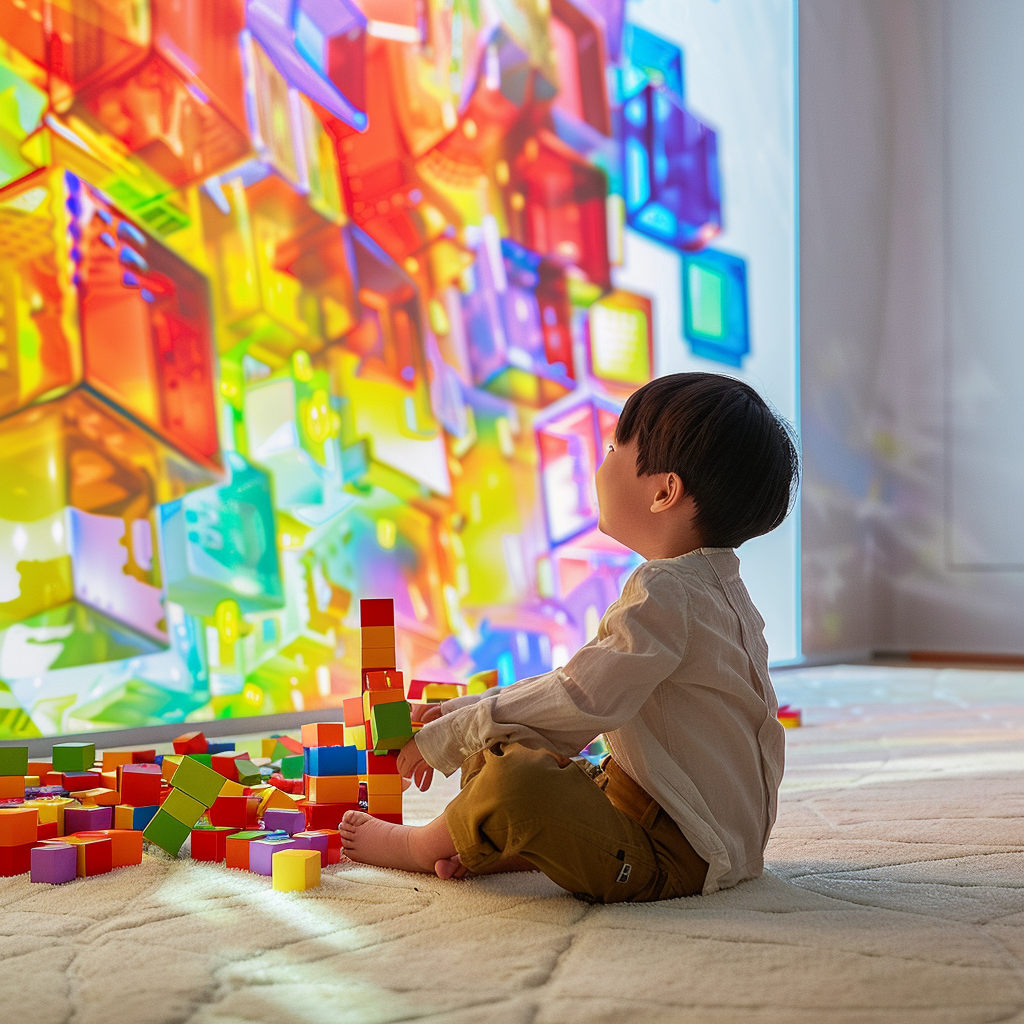
Architectural-scale, large-format digital surfaces hold fascinating potential. Just imagine taking the stunning capabilities of modern Hollywood virtual production studios, combined with various technologies that are being turbocharged with A.I. including instantly generated scripts, responsive characters, voice interfaces, game engines and programmatic/parametric spatial generation.
And letting a child grow up in that environment.
Children living with these immersive digital tools will have a direct connection between whatever they imagine and seeing it visualized in real time, in real space and with real interaction.
Think about this: Steven Spielberg was given a Super 8 camera at age 12, and look at the creative legacy that such a clunky old tool enabled.
Now imagine the power of letting a child, in the magical prime of their creative life, explore their own imagination using such wildly powerful tools as the most technically advanced film or game studios currently use, at a fully immersive architectural scale in their own room.
Taken together, these tools will enable entirely new ways of “being creative” for the next generation that we cannot even foresee yet: Not just a “bicycle for the mind” but rather a “bicycle for the imagination.”
The danger is turning these immersive places into yet another mindless consumer media channel. Silicon Valley and Hollywood love to hijack a child’s mind to drive their revenue streams. But full-scale immersive digital experiences don’t have to replace a child’s imagination – they can readily augment, leverage and extend it. They can make the act of a child using their own imagination to be wildly more fun than using some trashy, mindless, designed-to-be-addictive game or show.
Is there a threshold of scale that turns a digital experience into an integral, immersive, positive part of human life, versus these small black mirrors that hijack and confiscate our bodies and mind?
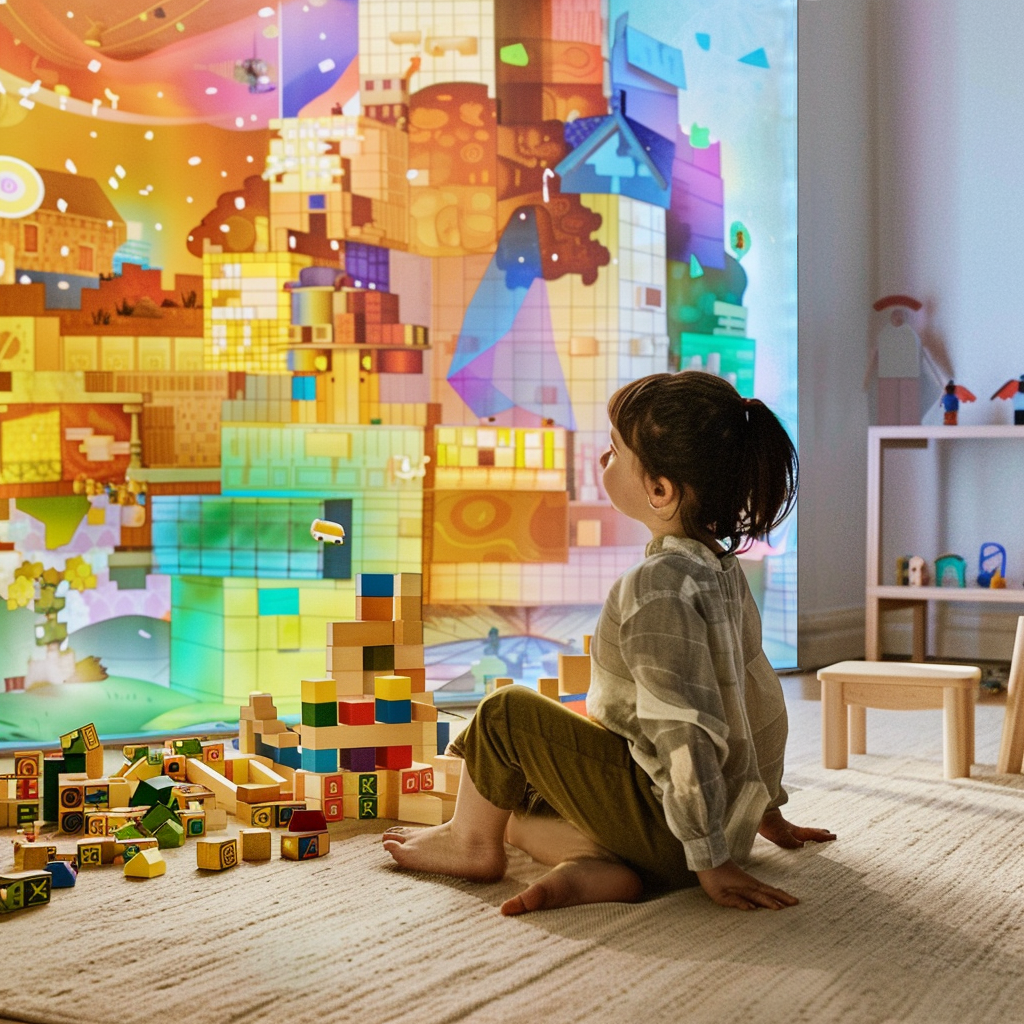
What happens when we grant creative autonomy to a child to build and live in their own magical realm?
 Lucept